 Living Space Expert
Keeping your space secure is a basic need, but what happens when you find yourself behind a door without a lock—or with a lock that’s broken, loose, or unreliable? Whether you’re traveling, living in a shared house, staying in a rental property, or simply facing a temporary issue at home, knowing how to lock a door without a lock can be incredibly useful.
In this detailed guide, we walk through practical, safe, and creative solutions you can use to secure a door from the inside using everyday items such as chairs, belts, shoelaces, door wedges, and improvised tools. These methods work for different types of doors including inward-opening doors, outward-opening doors, and even sliding doors.
Why You May Need to Lock a Door Without a Lock
There are several everyday situations where this skill becomes important:
- Your room doesn’t have a built-in lock
- You’re staying in a hotel, Airbnb, or hostel
- Your lock is damaged and you need a temporary fix
- Someone keeps entering your room without permission
- You need additional reinforcement beyond a normal lock
- You want extra safety while traveling or sleeping
The good news? You don’t always need tools or hardware. Many simple objects can serve as temporary door-locking mechanisms.
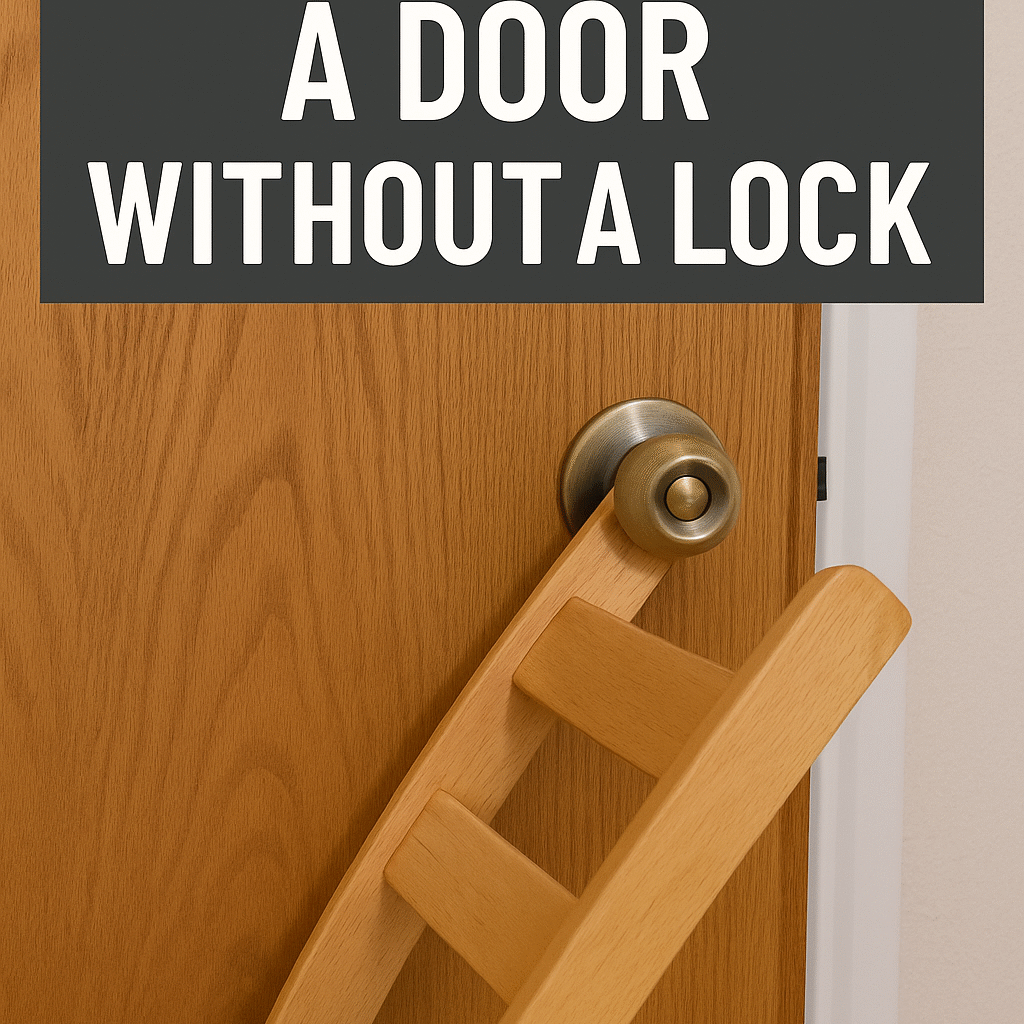
1. Use a Chair to Secure the Door (Classic Method)
One of the easiest and most common ways to lock a door without a lock is by using a chair.
How it works:
- Place the chair under the doorknob.
- Angle the back of the chair so it creates downward pressure.
- The force makes it difficult to push the door inward.
When it works best:
- Doors that open inward
- Doors with doorknobs at a standard height
Why it’s effective:
The angled force of the chair acts as a barricade, making it nearly impossible to force the door open from the outside.
2. Use a Door Wedge or Homemade Wedge
A door wedge is a small triangular piece designed to stop doors from moving. If you don’t have a store-bought wedge, you can make one from:
- Rubber
- Cardboard
- A small wooden block
- A folded cloth
- A tightly rolled towel
How to use it:
- Slide the wedge under the bottom edge of the door.
- Push it firmly so it gets stuck between the floor and the door.
- For extra security, add a second wedge on the other side if possible.
Works best for:
- Inward-opening doors
- Floors with friction (tile, wood, carpet)
Security level:
Moderate to strong—depending on the friction of the floor and the material of the wedge.
3. Use a Belt Around the Door Handle
A belt can turn into a makeshift lock if the door has a handle rather than a knob.
How to do it:
- Wrap the belt around the handle.
- Secure the other end of the belt to a sturdy object such as a bed frame, heavy desk, or exposed hinge.
- Tighten the belt so the handle cannot turn or move.
Why this works:
For many door handles, preventing the handle from turning is enough to keep the door locked.
Best for:
- Lever handles
- Doors that open inward
- Rooms with heavy furniture near the door
4. Use a Portable Travel Lock (Highly Recommended)
A portable travel lock is one of the safest and easiest tools for locking a door without a built-in lock.
These are small, lightweight, and fit perfectly into luggage or even a pocket.
How to use it:
- Insert the metal claw into the door strike plate.
- Close the door.
- Attach the locking mechanism on the inside.
Why travelers love it:
- Works in hotels, hostels, dorms, rental properties
- Doesn’t damage the door
- Prevents the door from being opened even with a key
Security level:
Very high. Even hotel staff with a key cannot enter.
5. Use a Fork to Lock the Door (DIY Trick)
Yes—a simple metal fork can become a temporary lock.
Steps:
- Open the fork’s prongs slightly.
- Insert the prongs into the strike plate hole.
- Close the door.
- Place the fork handle between the prongs.
This creates a barrier preventing the door from opening.
Works best for:
- Standard strike plates
- Metal forks (not plastic)
6. Use a Rope or Shoelace to Secure the Door
If your door has a lever-style handle, you can prevent opening using rope, a shoelace, scarf, or string.
How to secure it:
- Tie the rope around the handle.
- Pull the other end tightly toward a stationary object.
- Knot securely so the handle cannot turn.
Great for:
- Bedrooms
- Bathrooms
- Dorm rooms
This prevents the handle from being pushed down from the outside.
7. Barricade the Door with Heavy Furniture
For maximum security, physical barriers work well.
Best furniture pieces to use:
- Dressers
- Desks
- Sofas
- Bookshelves
- Bed frames
- Heavy chairs
How to barricade:
- Push the heaviest object directly in front of the door.
- Stack lighter furniture behind it for additional pressure.
Security level:
Very high—ideal during emergencies.
8. Use a Security Bar or Jammer
A door security bar is placed at an angle between the doorknob and the floor, similar to the chair method but much stronger.
Advantages:
- Adjustable
- Works on different floor heights
- Designed for preventing forced entry
Works for:
- Bedrooms
- Apartments
- Hotels
- Sliding doors (with special versions)
9. Use a Rubber Band (Light Security)
This method is not high security, but useful for preventing accidental entry.
How to use it:
- Loop a rubber band across the door latch.
- Hook both ends around the door handle.
This keeps the latch pressed in so it cannot lock into place.
Best for:
- Keeping kids out
- Preventing the door from closing unintentionally
Not ideal for real security needs.
10. Use a Floor Sock or Towel Roll
A thick sock, rolled towel, or small pillow can be jammed under the door to reduce movement.
How it helps:
- Increases friction
- Makes forced entry harder
- Reduces noise
- Provides privacy
Works well with other methods like a wedge or chair.
11. Zip Ties for Lever Handles
If you have zip ties available, they can prevent a handle from moving.
How to use:
- Wrap one zip tie around the lever handle and a strong anchor (hinge, heavy object).
- Tighten it fully.
Warning:
Zip ties must be cut to remove.
12. Magnetic Door Locks (Temporary)
Some renters use temporary magnetic locks that stick to the frame without screws.
Benefits:
- Damage-free
- Invisible from outside
- Easy to install
Great for shared living spaces.
13. Use Adhesive Hooks and Rope
If nothing else works, create a makeshift locking system.
Steps:
- Stick a heavy-duty adhesive hook near the door.
- Tie a rope from the handle to the hook.
- Pull tight to prevent the handle from moving.
Good for:
- Temporary living spaces
- Bathrooms and bedrooms
- Renters avoiding holes or screws
14. Secure Sliding Doors with a Rod
Sliding doors don’t lock easily without hardware, but a rod fixes the issue.
How to do it:
- Insert a broomstick, curtain rod, or wooden dowel into the sliding track.
- Make sure it fits tightly.
This physically blocks the door from sliding open.
15. Use Door Chains or Latches (No Drilling Required Versions Available)
You can buy adhesive-based door chains that stick to the frame.
Benefits:
- No tools needed
- Strong security
- Reusable
A perfect upgrade if you’ll be living in a place for more than a few weeks.
Safety Tips When Locking a Door Without a Lock
- Always choose a method that does not damage the door or frame if you’re renting.
- Never use methods that prevent exit during an emergency (fire, medical issue).
- Inform trusted people in your home that your door is secured.
- If you need long-term security, install a proper lock.
Final Thoughts
Learning how to lock a door without a lock is incredibly helpful in everyday life—whether you’re traveling, living with roommates, or dealing with a temporary lock failure. From chairs and wedges to belts, portable travel locks, and furniture barricades, there are many safe and effective methods you can use depending on the type of door and the tools available.